
As I discussed with my group the theme of using
reclaimed wood was a one we all thought would work well for my project, and the
idea of bringing the outside inside. However I realised from their views that
using this as the main focus for my project was not going to translate well for
an interior setting. Therefor we decided together that a good starting point
for this would be to use the reclaimed wood as drawing utensils. I have used
sticks in previous projects to create drawn work and I feel that they have
worked well for me as I think that rough and sketchy drawings are the style
that I work in. However I was very surprised at some of the interesting and
personal marks I was able to create with these. As I started to create my
initial drawings I was trying to focus on the playful aspect that the Whitworth
use. I was doing this by aiming my designs at a younger audience. Here are some
examples of my initial drawings.


I started to create designs using my initial
drawings. At first I wasn’t sure where I saw my designs going so I looked at
lots of different interior outcomes such as; cushions, blinds, lampshades,
wallpaper and feature posters. I thought that my initial designs were
successful and I was very pleased with the colour scheme I had chosen to use, based on colours I had chosen from existing products within the gallery’s
retail outlet. Here is my colour board

Although I found my initial designs successful I
was uncertain that I was hitting my target audience. I felt that my designs
although playful, where for a more mature audience. I met up with my group to
discuss this and receive some feedback on my initial designs. My group also
agreed that my designs were more suited to adults. I decided to take on a new
approach with my project and instead of changing my designs; I would carry on
working in this way and aim my designs at adults as apposed to children. My
group and I thought that this was the best decision to make, as they all really
liked my initial designs and colour scheme. Having meetings with my group has
really helped me to see the strengths and weaknesses within my work as they are
looking at it from a 3D disciplinary angle, whereas usually the only other people
would view my work would be textiles students also. I feel that this has been a
key aspect for my work developing because I do not know what kind of discipline
the client or consumer of my product will have. Therefor having
interdisciplinary views on my work has vastly improved the quality and
strengthened my own initial ideas. Here are a few examples of my initial
designs.

These are some more developed designs I have
created after receiving feedback from my tutorials and my group.

After looking at lots of contextual research of
interior settings and home furnishings I decided that I would carry on
developing the print designs I had already created, but also I would start
designing specifically for a cushion outcome. As I thought that this would be
an achievable outcome to actually produce within the time frame that I have. I
will be aiming to design and make 3 complete cushions that sit well together as
part of a larger collection of print designs. As well as this, from feedback I have
received from my group and tutorials I will also apply my designs to other
outcomes as visualisations. This way the client will be able to see all of the
possibilities that my designs could be applied to without me having to make the
outcome itself. Here are some of my developed designs that could be applied to
cushions.
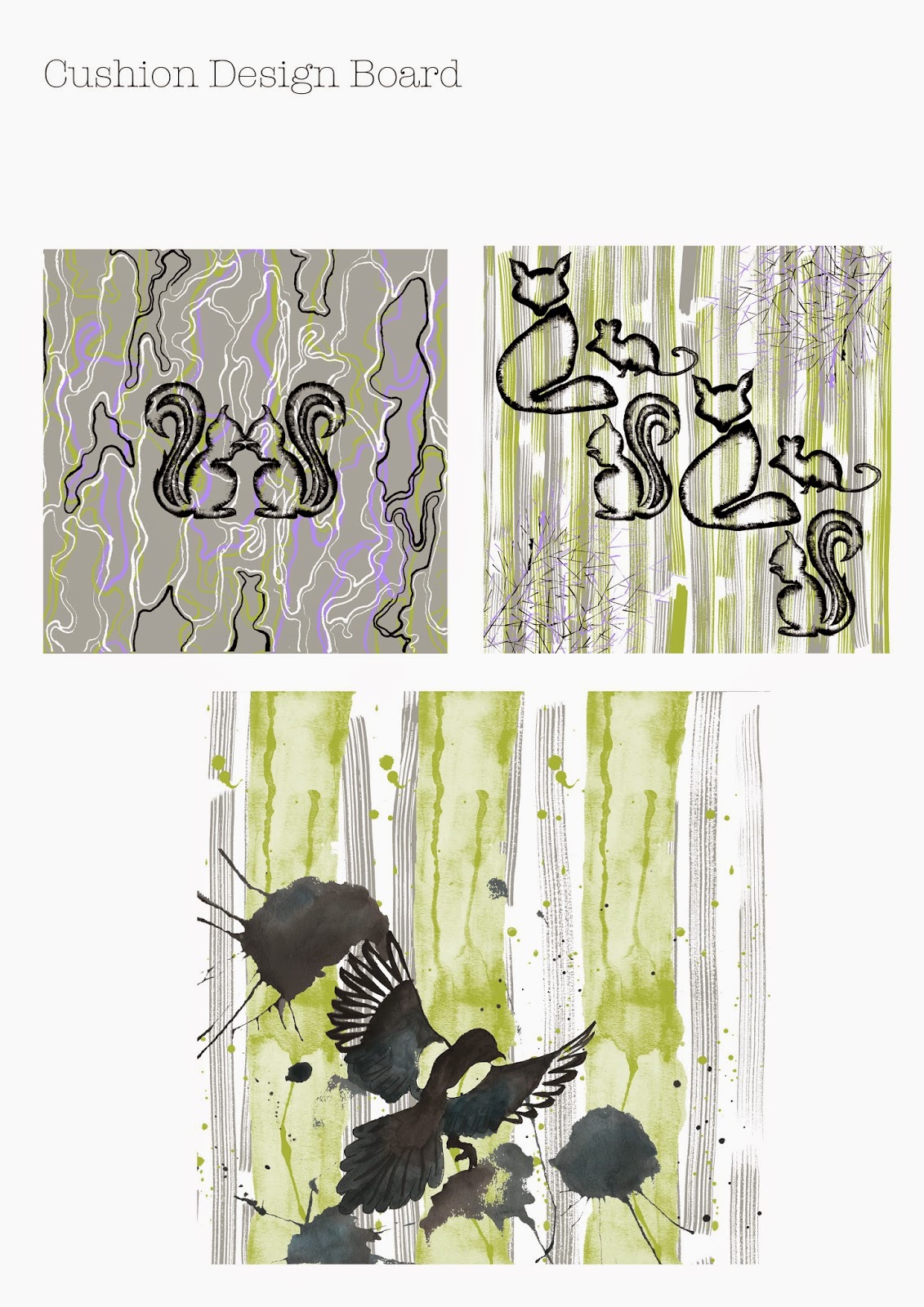
Although I have designed prints for cushions
before I have never actually tried making them as an outcome. Therefor I was
very pleased with the way that they turned out although, I had to have a few
attempts. Because I have actually made them this time I have gained a greater
appreciation for the context of my design work. Here are my final cushions.

Although I would love to be able to actually make
more outcomes for my project, due to time and uncertainty of the making process
I will not be able to create any more project outcomes. However I have created
these digital visualisations to show my print designs in different contexts.


I met up with my group today before I had my sign
up tutorial and I was very interested to see how much progress we had all made
in the past week. I am very appreciative of their discipline and how 3 people
all doing 3D design could come up with 3 amazing concepts that are all so
different but are all working very successfully in their own way.

For the next part of my project I will be
focusing on finalizing all of my sample work and creating boards that
accurately explain my projects key items to an outside audience. I will do this
with the intent of displaying these boards alongside my fabric samples and my
final cushions at the exhibition. Although I do not think that all of my
designs have been successful I will still display all of the sample work that I
have created. After attending my sign up tutorial this week I received very
positive feedback from both tutors and I was very pleased. The only advice they
were able to give me was to start creating a brand for myself, as I hadn’t
really thought about this. So the next task I will be undertaking is creating things
like business cards and tags for my cushions. Hopefully through researching
branding I will be able to further my contextual research and knowledge. Here
are my initial designs for these


